


What's Ahead
When a plumber tells you your floor has to be broken up, it can feel overwhelming fast. You may be wondering how much of your home will be torn apart, how loud or messy the work will be, whether you will lose access to water or bathrooms, and what your floor will look like once the pipe is fixed.
At Eco Plumbers, Electricians, and HVAC Technicians, we have helped homeowners throughout Ohio deal with under-floor plumbing repairs, including slab leaks, damaged drain lines, sewer line issues, and pipes buried beneath concrete, tile, or basement floors. We know the scariest part is often not the repair itself. It is not knowing what happens next.
In this article, you will learn what to expect when your floor has to be broken up for plumbing repairs, including how plumbers locate the problem, what happens before the floor is opened, how the pipe is repaired, what kind of mess or disruption to expect, and what questions you should ask before approving the work.
By the end, you will understand whether this type of repair is truly necessary and how to prepare for it with fewer surprises.
Why Would A Plumber Need To Break Up Your Floor?
A plumber may need to break up your floor when the damaged pipe is buried underneath it, and there is no practical way to reach it from a wall, ceiling, crawl space, or exterior access point.
This usually happens when the problem is located under a concrete slab, basement floor, tile floor, or another finished surface that blocks access to the pipe.
Common reasons your floor may need to be opened include:
- A leaking water line under a concrete slab
- A damaged sewer or drain line under a basement floor
- Broken cast iron, clay, copper, or PVC piping below the slab
- A slab leak causing water damage, warm spots, or unexplained moisture
- Drain line bellies, cracks, separations, or collapses
- Sewer odors or repeated backups coming from a buried line
- Older plumbing that was installed before the finished floor was added
- Installation of additional bathrooms or plumbing fixtures in a basement
In some cases, your plumber may be able to avoid opening the floor. For example, a leaking water line might be rerouted through a wall or a ceiling. A damaged drain or sewer line may be a candidate for trenchless pipe lining. Some pipes can also be accessed from outside the home instead of through the interior floor.
Finding a reputable plumber is important to ensuring the correct decision is made. However, those options do not work for every repair. If the pipe is collapsed, badly misaligned, heavily deteriorated, or located in an area where trenchless repair is not possible, breaking the floor may be the best option.
How Do Plumbers Know Where To Break The Floor?
Before any floor is opened, your plumber should first narrow down the repair location as much as possible. This helps avoid unnecessary demolition while still giving the crew enough room to fix the pipe correctly.
Depending on the problem, they may use:
- A camera inspection for sewer or drain line damage
- Heat cameras and sound leak detection for water lines under the slab
- Moisture testing around floors, walls, or baseboards
- Listening equipment to find hidden water movement
- Pressure testing to confirm a supply line leak
- Pipe locating and marking before cutting begins
For drain and sewer lines, a camera can often show cracks, root intrusion, blockages, bellies, or collapsed sections. It’s important to note that not all drain lines can be inspected with a camera. Depending on the pipe size and condition, it may not be possible or practical to perform a camera inspection.
For water lines, leak detection helps narrow down the damaged area before concrete or flooring is removed.
What Happens Before The Floor Is Broken Up?
Before we open your floor, your technician should explain what needs to happen, which areas of your home may be affected, and how you can prepare. At Eco, we want you to know what to expect before any cutting, jackhammering, or demolition begins.
Breakup areas are construction zones and should be treated as such. While we will treat your home with the utmost care, we highly recommend removing anything of value from the area before work begins.
In most cases, we will ask you to move furniture, rugs, storage items, or fragile belongings. We may also ask you to clear a path for our equipment and keep children and pets away from the repair zone.
If you have finished flooring, we will also explain where the flooring may need to be removed and what is included in your repair. Here at Eco, our jobs only include pipe repair and a rough concrete patch. Finished flooring, such as tile, hardwood, vinyl, or carpet, will need to be handled separately by a contractor that specializes in these services.
Before work starts, we will take steps to protect your home. This may include floor coverings, plastic sheeting, dust barriers, fans, vacuums, or other dust-control equipment. Our goal is to contain the mess, protect nearby areas, and leave the work area clean once the plumbing repair is complete.
How Loud And Messy Is A Floor-Breaking Plumbing Repair?
Floor-breaking plumbing repair is loud, dusty, and disruptive, even when handled carefully. If we need to cut concrete, break tile, or open a basement floor, you should expect noise, vibration, workers moving through your home, and limited access to the repair area.
If we are opening a sewer or drain line, you may also notice plumbing odors or need to avoid using certain fixtures for part of the repair. At Eco Plumbers, Electricians, and HVAC Technicians, we will explain those limits before work begins so you can plan around them.
Will Your Water Or Drains Be Shut Off During The Repair?
In many cases, yes. If we are repairing a water supply line, we may need to shut off water to the whole home or isolate one section of the plumbing system while we work.
If we are repairing a sewer or drain line, we may ask you not to use certain fixtures, such as toilets, sinks, showers, laundry, or dishwashers, until the line is repaired and tested.
Before work begins, our team will explain what to expect. We will let you know how long the water or drains may be unavailable, whether any fixtures can still be used, whether the repair is expected to take one day or multiple days, and whether the home will be usable overnight.
We will also talk through what happens if we find more pipe damage once the floor is opened. Under-floor plumbing repairs can change once the pipe is exposed, so we want you to understand the possibilities before your home becomes an active work zone.
What Does The Actual Floor-Breaking Process Look Like?
Every home is different, but most floor-breaking plumbing repairs follow a similar process.
Step 1: We Mark The Repair Area
First, we mark the section of the floor that needs to be opened. This is usually based on the results of leak detection, camera inspection, pipe locating, or the most practical access point for the repair.
Step 2: We Remove The Finished Flooring
Before we can reach the pipe, we may need to remove tile, laminate, carpet, hardwood, vinyl, or another finished flooring material. In some cases, the flooring can be cut back neatly. In other cases, more flooring may need to come up, especially if the material is brittle, glued down, or difficult to match later.
Step 3: We Cut Or Break The Concrete
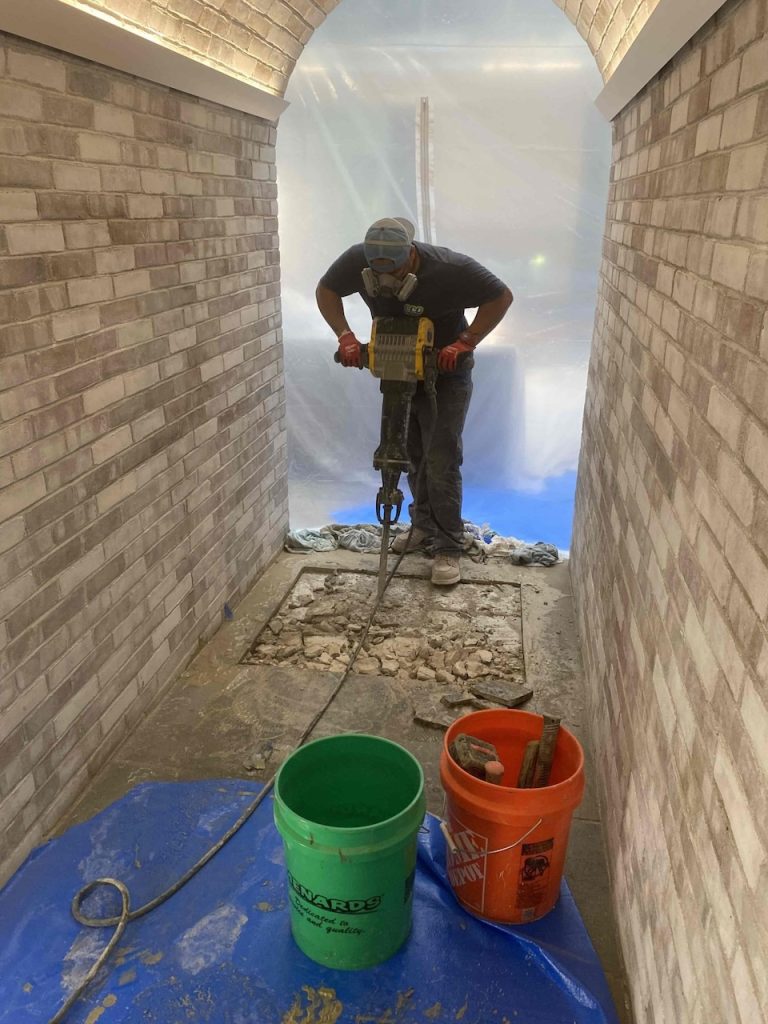
Once the finished flooring is removed, we cut or break the concrete so we can reach the pipe underneath. This may involve a concrete saw, jackhammer, rotary hammer, or other equipment. We will also use dust-control methods to help contain the mess as much as possible.
Step 4: We Remove Soil Or Gravel Around The Pipe
After the slab is opened, we remove the soil, gravel, or fill material around the pipe. This gives us enough room to inspect the pipe, work safely, and make the repair correctly.
Step 5: We Expose And Inspect The Damaged Pipe
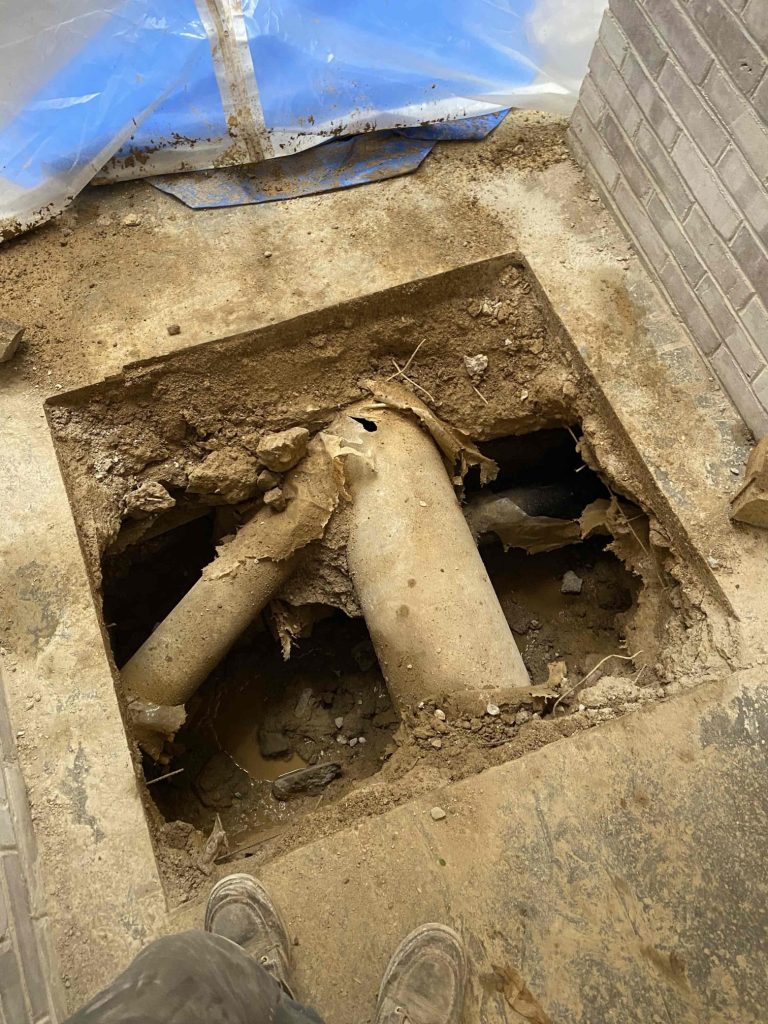
Once the pipe is uncovered, we inspect the damaged section and the nearby piping. Sometimes the problem is exactly what we expected. Other times, we may find additional damage, such as corrosion, cracks, poor slope, loose fittings, or pipe sections that are more deteriorated than they looked on camera. It is common for dig areas to fill up with groundwater during the repair process.
Step 6: We Repair Or Replace The Pipe
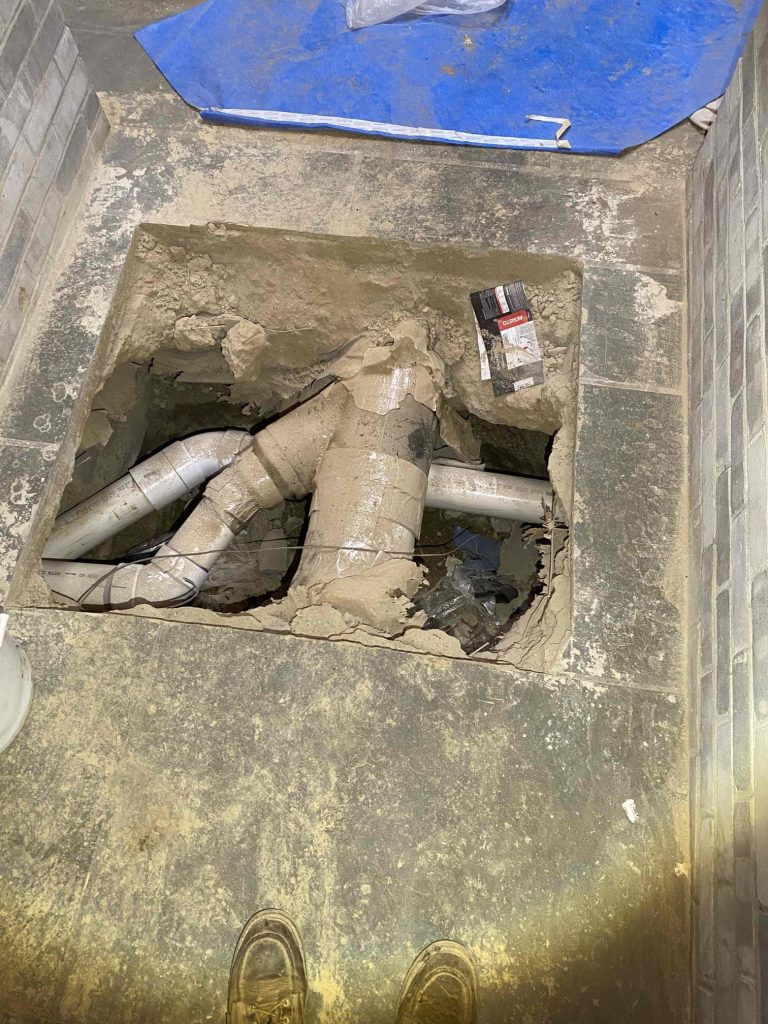
Depending on the pipe material and condition, we may cut out the damaged section and replace it, install an approved repair fitting, reroute part of the line, or recommend a larger repair if the surrounding pipe is failing.
Step 7: We Test The Repair
Before the floor is closed, we test the plumbing repair. This may include running water, checking for leaks, pressure testing a supply line, or using a camera to confirm that a drain or sewer line is flowing properly.
Depending on the scope of the repair and the municipality, an inspection of the work may be necessary before concrete is poured. This inspection is typically performed by the entity in which the plumbing permit was pulled through.
Step 8: We Backfill And Patch The Opening
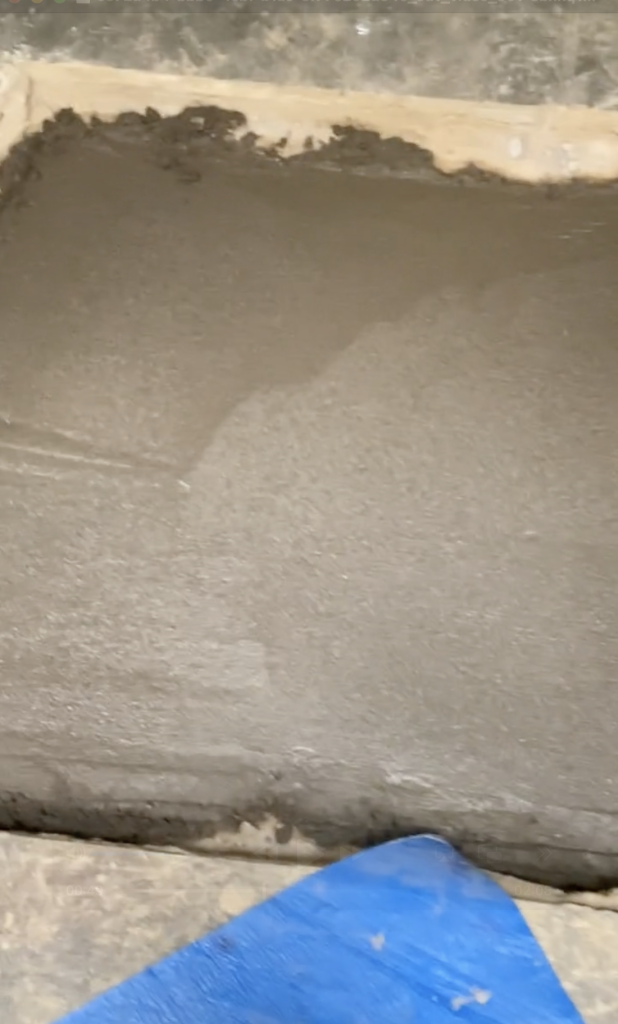
Once the repair is tested, we backfill the opening, compact the material as needed, and patch the concrete to a rough finish. After that, the finished flooring still needs to be restored.
The plumbing repair and the finished floor restoration are often two separate parts of the project. Before we begin, we will explain whether Eco is handling the pipe repair only, the concrete patch, or any additional restoration work.
Will The Finished Floor Look The Same Afterward?
Not always. This is one of the most important expectations we will talk through with you before we open the floor.
We take pride in doing everything possible to restore your floor as closely as we can to its original appearance. However, the finished floor may look different if the original material has been discontinued, tile damage extends beyond the repair area, the existing hardwood stain has faded, the vinyl or laminate pattern is no longer available, or the repair spans multiple rooms. In some cases, the floor may also need to be leveled before new flooring can be installed.
A concrete patch is not the same thing as a fully restored, finished floor. If you want the room to look the way it did before the repair, you may need a flooring contractor, restoration company, or remodeling professional after the plumbing work is complete.
How Long Will The Repair Take, and What Could Make It Bigger?
Because every floor-breaking plumbing repair is different, the timeline varies from job to job.
What Can Affect the Repair | How It Can Change The Timeline or Scope |
Pipe location | Pipes that are deeper, harder to access, or located under finished flooring may take longer to reach |
Type of pipe | Water lines, drain lines, and sewer lines all require different repair methods and testing |
Concrete thickness | Thicker concrete or reinforced slab areas can take longer to cut, break, and remove |
Flooring removal | Tile, hardwood, vinyl, laminate, or carpet may need to be removed before we can access the concrete |
Pipe material | Older cast iron, clay, copper, or deteriorated piping may require a larger repair than expected |
Additional pipe damage | We may uncover corrosion, multiple cracks, collapsed sections, poor slope, or loose fittings once the pipe is exposed |
Water damage | Wet areas may need to dry before concrete is patched or finished flooring is repaired |
Mold or hidden damage | If moisture has been present for a while, cleanup may be needed before remediation |
The plumbing repair itself may be quick, but finding the pipe, opening the floor, drying the area, patching the concrete, and restoring the finished flooring can add time to the overall project. Certain municipalities may require additional reviews on permits, which could incur additional wait times before concrete can be laid or fixtures can be set.
Can You Stay In Your Home While The Floor Is Broken Up?
Usually, yes, but it depends on the location and severity of the repair.
You can often stay home if the work area is isolated, you have access to another bathroom, and your water service can be restored the same day.
You may want to make other arrangements if your only bathroom is out of service, the repair affects your kitchen or main living area, a sewer line will be open overnight, or there are concerns about heavy dust, odors, water damage, or mold.
We will explain what to expect before work begins so you can plan realistically. Even a well-run floor breakup can make your home uncomfortable.
Are There Alternatives To Breaking Up The Floor?
Sometimes. Not every under-floor plumbing problem requires us to open the floor, but not every problem can be fixed any other way.
Pipe Rerouting
For some water line leaks, we may be able to abandon the leaking line under the slab and run a new line through a wall or a ceiling. This can reduce concrete demolition, but it may require drywall repair.
Trenchless Pipe Lining
For some drain or sewer lines, a liner can be installed inside the existing pipe. This may help avoid opening floors, driveways, or landscaping, but the old pipe must be in good enough shape to support the liner.
Pipe Bursting
In some sewer replacement situations, the old pipe can be broken apart while a new pipe is pulled into place through access points.
What Should You Do Next If Your Floor Has To Be Broken Up For Plumbing Repairs?
If your floor has to be broken up for plumbing repairs, it usually means the damaged pipe cannot be safely reached any other way. While the process can be loud, dusty, and disruptive, it should never feel unclear.
The biggest thing to remember is that the plumbing repair is only one part of the project. Your water or drains may be unavailable for a short time, your home may be uncomfortable during the work, and the finished flooring may need to be repaired separately after the concrete is patched. That is why it is so important to understand what is included before the floor is opened.
Your next step is to read our guide on What to Expect During a Plumbing Service Visit with us.
At Eco Plumbers, Electricians, and HVAC Technicians, we help homeowners throughout Ohio understand their plumbing repair options before work begins. If you are dealing with a possible under-floor leak, damaged drain line, sewer issue, or slab plumbing problem, our team can inspect the issue, explain your options, and help you move forward with a repair plan that makes sense for your home.
FAQs
Is it normal for plumbers to break concrete to fix pipes?
Yes. If the damaged pipe is under a slab, basement floor, or other hard surface and cannot be reached from another access point, opening the floor may be necessary. This is usually done only after the plumber has used camera inspection, leak detection, or another locating method to narrow down the repair area.
Can a plumber tell exactly how much floor will be removed?
A plumber can usually estimate the access area before work begins, but the final opening may change once the floor is opened. The pipe may be deeper than expected, harder to reach, or more damaged than the initial inspection showed. If the repair feels expensive, disruptive, or based on guesswork, getting a second opinion is a good idea.
Will Eco replace my tile or hardwood floors afterward?
No. At Eco Plumbers, Electricians, and HVAC Technicians, our floor-breaking plumbing repairs include pipe repair and concrete patching. Finished flooring, such as tile, hardwood, vinyl, laminate, or carpet, needs to be handled separately by the homeowner, a flooring contractor, restoration company, or remodeling professional, as it is outside of our scope of work.